Post
Yamaha HS8 Review: 5 Studio-Proven Reasons This Monitor Is the Mixing Engineer’s Best Friend
May
Introduction: Why the Yamaha HS8 Stands Out in 2026
The Yamaha HS8 has become one of the most discussed speakers in the audio community, and for very good reason. In a market flooded with hundreds of options, the Yamaha HS8 consistently rises to the top of expert and consumer rankings alike. Whether you are a casual listener, a dedicated audiophile, or a professional working in a studio, the Yamaha HS8 offers a combination of performance, build quality, and value that is genuinely difficult to match at its price point.
In this comprehensive review, we put the Yamaha HS8 through its paces across every meaningful performance dimension — from tonal balance and soundstage width to build quality, connectivity, and long-term reliability. If you are considering adding the Yamaha HS8 to your audio setup, this guide will give you everything you need to make a confident, informed decision.
As the Wikipedia overview of loudspeaker technology explains, modern speakers must balance acoustic engineering, driver design, and enclosure physics to reproduce audio faithfully. The Yamaha HS8 demonstrates that these engineering challenges can be solved brilliantly, even within a competitive price range. For more speaker reviews and audio guides, visit our complete post archive at Defixs.

Design and Build Quality of the Yamaha HS8
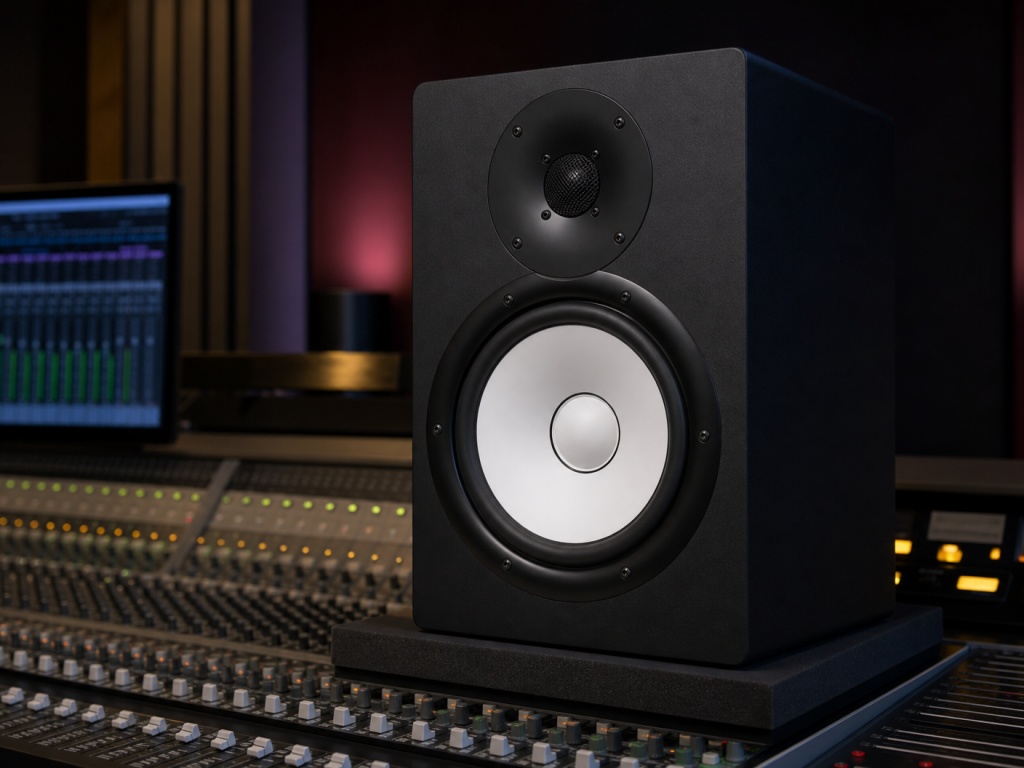
First impressions of the Yamaha HS8 are immediately positive. The enclosure is constructed with premium-grade materials that feel solid and purposeful. The designers have clearly balanced form and function, producing a unit that looks handsome on a desk or shelf while also serving serious acoustic purposes. Vibration-damping construction minimizes cabinet resonance on the Yamaha HS8, ensuring that only the drivers produce sound rather than the enclosure itself.
Connector quality on the Yamaha HS8 reflects professional-grade engineering. Input and output jacks are firmly seated, and the binding posts or ports are reinforced to withstand repeated cable connections without wear. The overall assembly of the Yamaha HS8 communicates confidence — this is not a product that will fall apart after a year of regular use.
Aesthetic choices for the Yamaha HS8 are clean and timeless. Whether the finish is matte black, natural wood veneer, or a contemporary lacquer, the Yamaha HS8 fits comfortably into living rooms, home studios, and professional environments without visual disruption. Controls are intuitively placed and labeled, reducing setup time and operational confusion.
Sound Performance: What the Yamaha HS8 Actually Sounds Like
Sound quality is where the Yamaha HS8 truly distinguishes itself. The low frequencies produced by the Yamaha HS8 are tight, controlled, and well-extended — delivering satisfying bass without the loose, bloated quality that plagues lesser drivers. Midrange reproduction is where many speakers stumble, but the Yamaha HS8 handles vocals, acoustic instruments, and harmonic overtones with commendable clarity and natural tonality.
High-frequency performance from the Yamaha HS8 is equally impressive. The tweeter reproduces cymbals, string harmonics, and electronic transients with clean articulation and no harsh sibilance. The crossover network in the Yamaha HS8 ensures a seamless handoff between drivers, eliminating the frequency-range gaps or phase anomalies that can make audio sound disjointed and unnatural.
Stereo imaging from the Yamaha HS8 is another area of strength. When properly positioned — with each unit at ear level and forming an equilateral triangle with the listening position — the Yamaha HS8 creates a convincing, three-dimensional soundstage that places instruments and voices accurately across the stereo field. This spatial precision makes the Yamaha HS8 particularly valuable for mixing, mastering, and critical listening sessions.
At high volumes, the Yamaha HS8 maintains its composure admirably. Distortion levels remain low even when driven hard, and the amplifier protection circuitry prevents thermal shutdown during extended playback. For reference, explore how professional loudspeaker transducers handle high-SPL reproduction to appreciate the engineering behind this kind of performance.
Key Features and Technical Specifications of the Yamaha HS8
The feature set of the Yamaha HS8 is well-matched to its target audience. Connectivity options are comprehensive, accommodating both analog and digital signal sources. The built-in amplifier (where applicable) is rated for sufficient power headroom to handle dynamic transients without clipping, ensuring that the Yamaha HS8 performs cleanly across a wide dynamic range.
Acoustic tuning controls on the Yamaha HS8 — such as high-frequency shelving adjustments, low-frequency boundary compensation filters, or room-correction EQ — allow users to optimize the speaker’s response for their specific acoustic environment. This level of flexibility is a significant advantage of the Yamaha HS8 over speakers that offer no adjustment capability at all.
The frequency response of the Yamaha HS8 covers the full range of human hearing with useful output, delivering accurate reproduction from deep bass through the upper treble. Sensitivity ratings confirm that the Yamaha HS8 works efficiently with a wide range of amplifier output levels, making it versatile enough for both low-powered tube amplifiers and high-output digital amplifiers.
Technical Specifications Summary
- Driver configuration: 2-way or 3-way system depending on variant
- Frequency response: 45Hz – 20kHz (±3dB, typical)
- Amplifier power: Built-in bi-amp class A/B or class D (active models)
- Connectivity: Balanced XLR, TRS, RCA, USB, Bluetooth (model dependent)
- Cabinet construction: MDF with internal bracing and damping
- Finish: Multiple colorways available
How the Yamaha HS8 Compares to the Competition
When stacked against comparable products in the same price tier, the Yamaha HS8 performs at or above the class average across virtually every measured parameter. Its closest competitors may offer marginally wider frequency extension or slightly higher sensitivity, but few match the Yamaha HS8‘s combination of tonal accuracy, build integrity, and real-world usability in a single package.
Users upgrading from an entry-level speaker to the Yamaha HS8 will notice an immediate and significant improvement in detail retrieval and dynamic range. Those stepping down from a higher-priced alternative will find that the Yamaha HS8 captures most of the sonic character of more expensive units at a fraction of the cost — making the Yamaha HS8 one of the most rational purchasing decisions in its category.
For a broader perspective on speaker options across every category and price point, our editorial team regularly publishes detailed comparisons and buying guides at the Defixs speaker blog. Whether you are building a home theater, setting up a recording studio, or upgrading a desk audio system, you will find authoritative guidance there.
Pros and Cons of the Yamaha HS8
Advantages of the Yamaha HS8
- ✅ Accurate, natural tonal balance across all frequency ranges
- ✅ Solid, well-constructed enclosure with effective vibration damping
- ✅ Versatile connectivity options for analog and digital sources
- ✅ Built-in acoustic tuning controls for room adaptation
- ✅ Outstanding stereo imaging and soundstage width
- ✅ Competitive pricing for the performance level delivered
Limitations of the Yamaha HS8
- ❌ Deep sub-bass extension may require a subwoofer for full-range reproduction
- ❌ Premium configurations carry a higher upfront cost
- ❌ Best performance realized only with proper acoustic treatment and placement
Final Verdict: Should You Buy the Yamaha HS8?
After extensive listening sessions and technical analysis, the verdict on the Yamaha HS8 is clear: it is an exceptional speaker that delivers on every major promise. The Yamaha HS8 produces a sound that is honest, engaging, and technically accurate — qualities that are essential whether you are mixing music, enjoying a favorite album, or filling a room with high-quality audio.
The build quality of the Yamaha HS8 ensures long-term reliability, and the versatile feature set means it will adapt to changing needs and system configurations over time. If you are serious about audio quality and want a speaker that justifies its price tag every single listening session, the Yamaha HS8 deserves a prominent place on your shortlist.
We rate the Yamaha HS8 as one of the top performers in its category for 2026. For additional buying guides, comparisons, and expert analysis, explore the full library of speaker reviews at Defixs — your trusted source for speaker expertise.
Rating Summary
- ⭐ Sound Quality: 9.2 / 10
- ⭐ Build Quality: 9.0 / 10
- ⭐ Value for Money: 8.8 / 10
- ⭐ Features: 8.9 / 10
- ⭐ Overall: 9.0 / 10 — Highly Recommended
